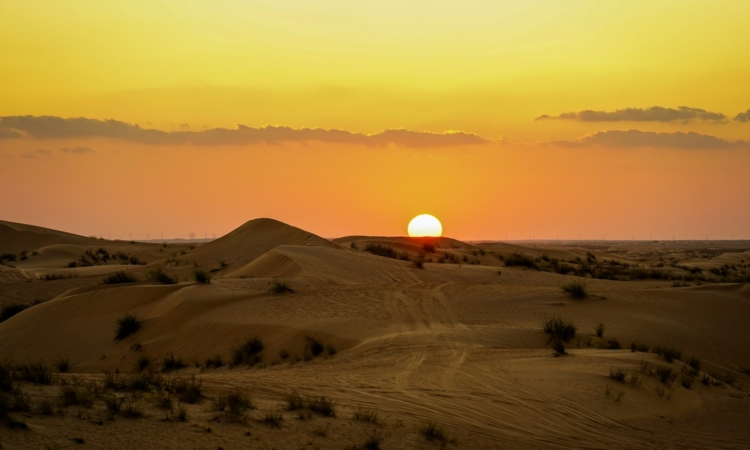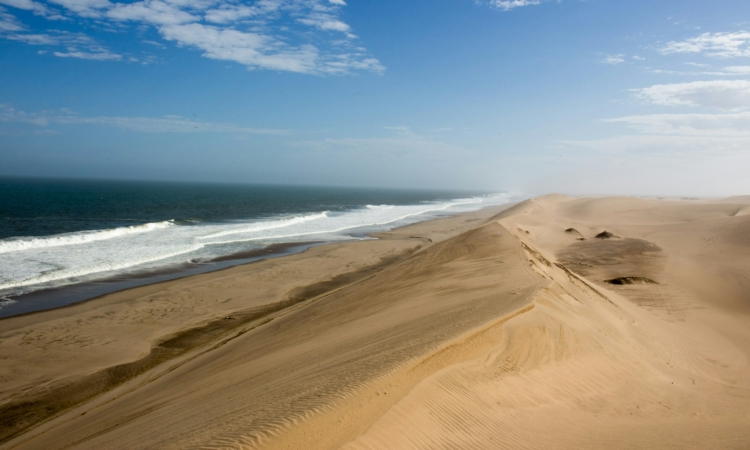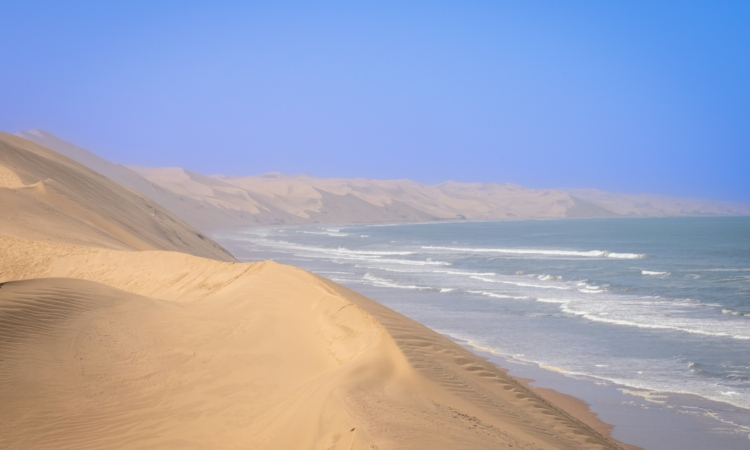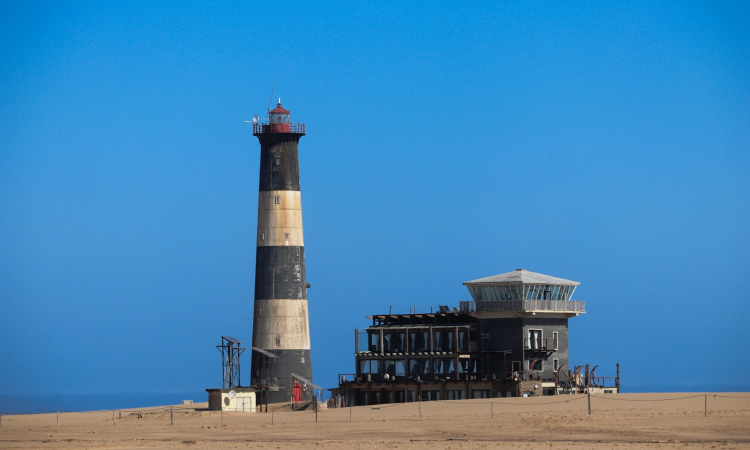

Southwestern Africa is home to the interesting and unique Namib Desert. Its sands are believed to be about 5 million years old, making it the oldest desert on Earth.
The Namib Sand Sea, a large part of the desert covering 34,000 km² (13,000 mi²), has many of the tallest dunes in the world. These wind-shaped dunes are a main highlight of any Namibian desert tour.

The sand in the Namib Desert comes from erosion in the south, near the Orange River basin. The Orange River carries the sand to the Atlantic Ocean, where ocean currents moving north deposit it along the coast.
The strong winds from the south also carry the sand into the desert. This ongoing process has created the Namib Desert’s long and tall dunes.
Despite the harsh environment, life has survived in the Namib Desert. The main source of water is fog that comes in from the ocean. This makes it the only coastal desert in the world with large fog-influenced dune fields.
On the rocky hills and mountains above the desert, this moisture helps support more plant life than in the flat areas.
Why Visit?
- The largest private nature reserve in Africa, covering more than 180,000 hectares
- Africa’s first International Dark Sky Reserve, offering clear night skies in the southern hemisphere
- The largest dune field south of the Sahara, located on the edge of the Namib Sand Sea
- Different types of dunes
- Wide open spaces
- Peace and quiet in the desert
- Clear skies and bright light, perfect for photography and stargazing from March to October
- Special desert animals, including many types of insects and reptiles, as well as oryx, springbok, Burchell’s zebra, Hartmann’s mountain zebra, and bat-eared foxes